A SENSORY CABIN
The cabin via five senses
The impression behind this cabin initiates the mindfulness of practicing meditation. The five senses, including sight, hearing, smell, taste, and touch, are examples of mindfulness exercises to achieve self-reflection: optimism, empathy, compassion, and lessening anxiety and stress.
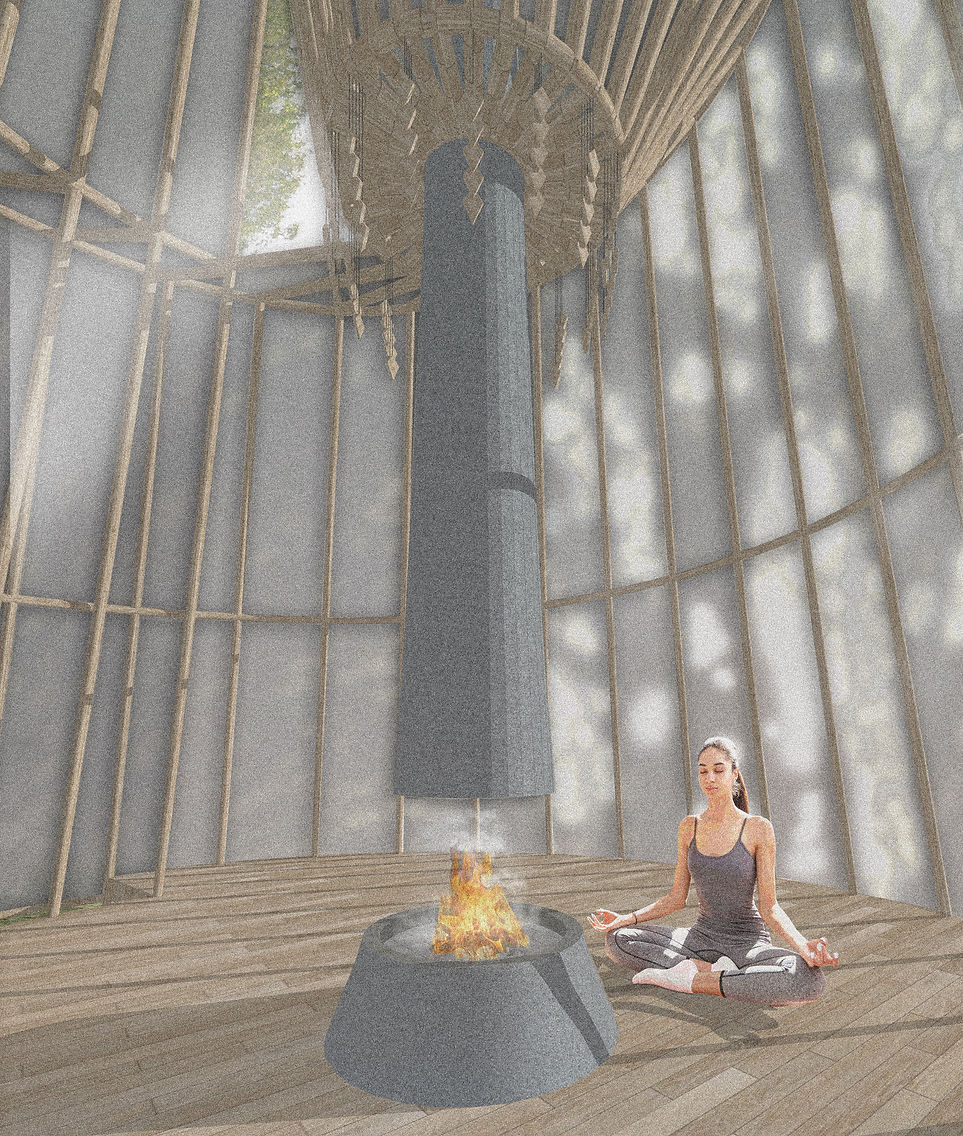
The cabin is designed to experience inborn senses in human beings at the time of meditating while reconnecting with the natural environment in the proposed site of New Zealand. Next, the richness of the topography, the surrounding essences, leafy tree views, and the metabolism of native wildlife are the catching elements for the concentration and encouragement in the mediation process. Furthermore, the characteristics of living creatures and organisms, the sound of birds and bugs, the fragrance of fresh ground and flowers, the taste of cultivated plants, and the touch of ground components including soil, grass, and stone are the sensitivity in which people inside the proposed cabin to experience.
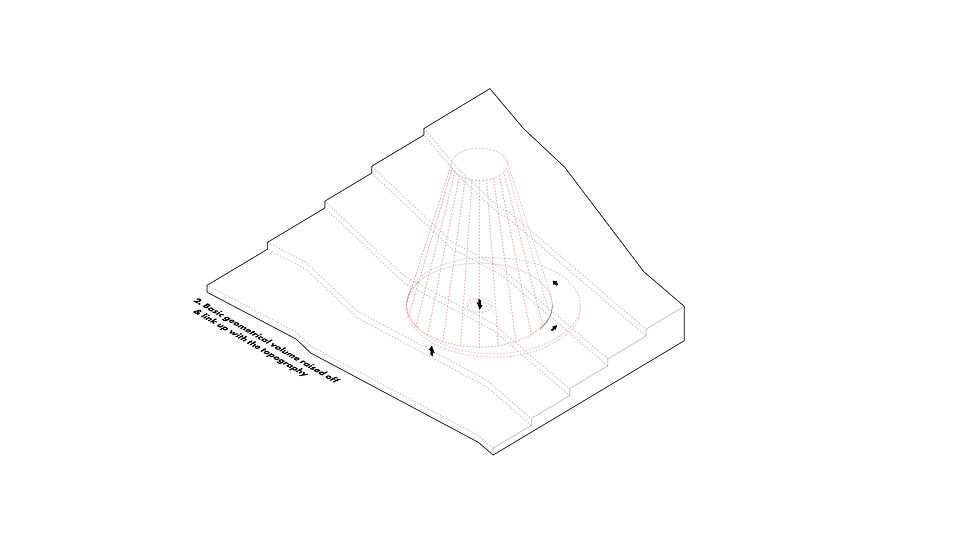
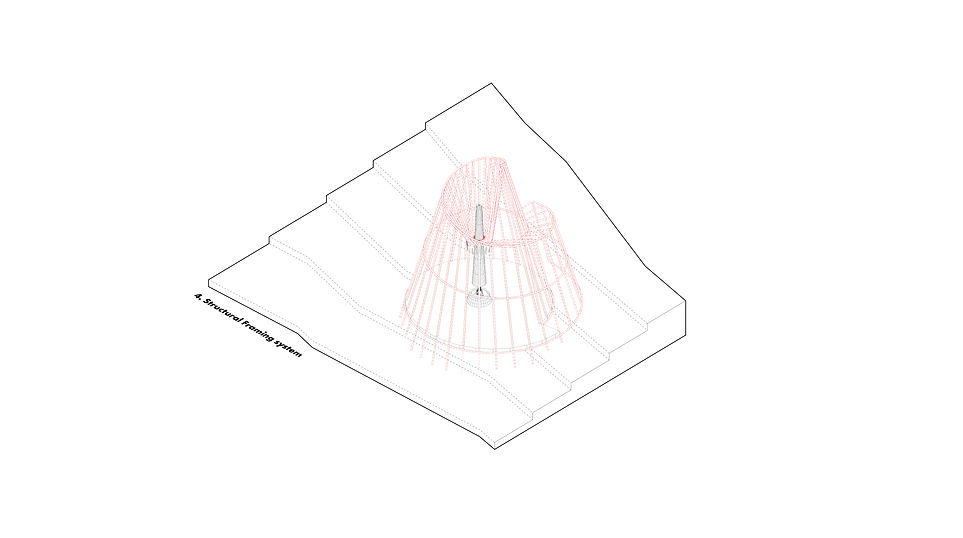
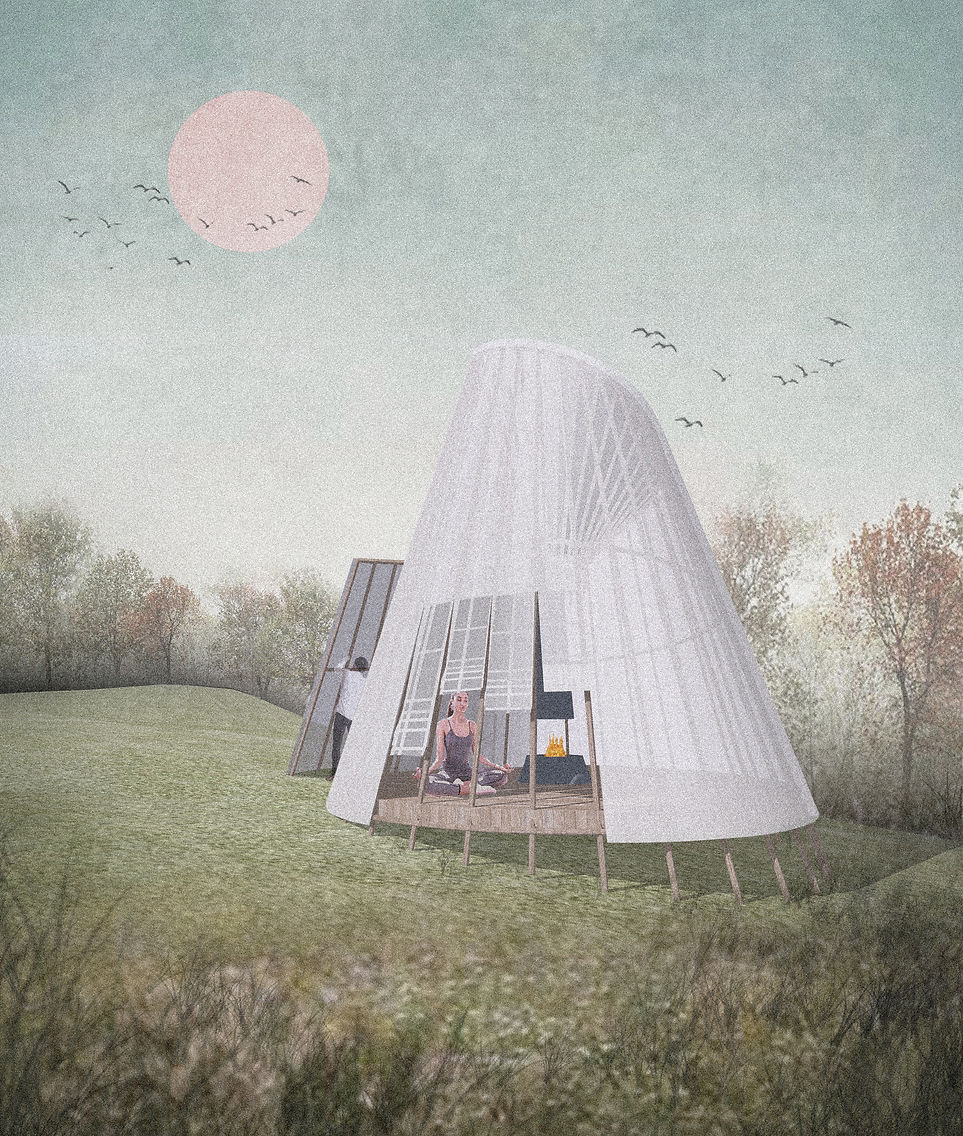
The cabin itself is interrelating with nature and its atmosphere to allow meditators and guests to discover the power of self-healing. The radius of 2.6m basic circle is focused on representing the metabolism of living things. The essential geometrical volume is created as the initial step of the design stage while linking up with the contouring hill. The prototypical cabin is set up to welcome users and bring nature to interconnect between inside and outside. Timber and fabric are mainly used as the structure and protection to reduce the carbon footprint, sustain the environment to avoid depletion or degradation of natural resources, and allow for long-term environmental quality. The cabin opens toward nature to increase the amount of interior daylight or maximize the use of free energy from the sun. Moreover, the covered layer of the cabin can be changeable as fabric or polyester according to the climate conditions.
A sensory cabin is proposed for the guests to meditate peacefully via the five senses within the remote and natural environment and set within a clearing of local New Zealand bush.
Perme-sory (Permeation - Sensory)
To interrelate the user and their surroundings and interact between the inside and outside atmosphere, the permeability is considered in an indirect way to experience how the five senses are relevant and significant to the meditators. The inspiration of Permea-sorry is the combination of permeation and sensory in which people to capture the natural elements slowly and steadily during the phenomenon of meditation.
Project Theme: sense organs
Project Year: 2020
Project Categories: Competition
Project Type: Meditation Cabin
Team: Wai Yan Oo
Collaborator: Yan Kyaw Lwin, Hein Thant Lwin, Khin Bo Bo Oo